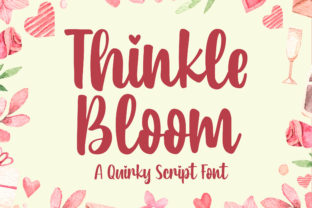
Thinkle Bloom Font: A Quirky Script for Creative Projects
As a web designer and product creator who often works with handmade shops, I’m always on the lookout for fonts that bring warmth, character, and a touch of romance to digital and physical designs. When I first saw Thinkle Bloom, a quirky and sweet script with a romantic spark, I knew it had potential. It wasn’t just another decorative font—it felt like something that could truly elevate a craft or shop listing. After putting it through my usual design tests—mockups for candle labels, greeting cards, packaging, and more—I wanted to share how this handwritten-style typeface performs in real-world creative scenarios.
Thinkle Bloom for Candle Labels and Handmade Branding
One of the first things I tested was using Thinkle Bloom on candle labels. The font’s playful yet elegant curves immediately gave each label a personal touch. Whether I was designing for a small artisanal brand or a seasonal collection, the romantic spark in Thinkle Bloom made the names feel handcrafted and heartfelt. Its charm is especially evident when paired with natural textures like kraft paper or linen wraps, where the subtle imperfections of a script handwritten style shine through.
I found that it worked best at slightly larger sizes—around 18–24pt—for readability without sacrificing its whimsical flair. For tiny details or addresses, I’d pair it with a clean sans serif font to maintain clarity. But for the main name or tagline, Thinkle Bloom added a unique sense of intimacy and quality that stood out in both mockup previews and final print samples.
Thinkle Bloom in Greeting Cards and Wedding Invitations
Next up were greeting cards and wedding invitations. Thinkle Bloom brought a soft, romantic mood to these delicate projects. On birthday cards, it felt joyful and personalized, while on wedding stationery, it exuded elegance and charm. The subtle variations in stroke width and the presence of ligatures and swashes helped each design feel bespoke, even if it was mass-produced as a printable template.
It’s important to note that because it’s a script handwritten font, not every word needs to be in Thinkle Bloom. I recommend using it for titles, names, or short phrases and balancing it with a simpler font for body text. This approach ensures your customers can read everything clearly but still enjoy the emotional appeal of your design.
Testing Thinkle Bloom on Farmhouse Signs and Boutique Tags
I also used Thinkle Bloom on a few farmhouse-style signs and boutique tags. The font’s organic flow complemented the rustic aesthetic beautifully. When paired with distressed wood textures or muted pastel backgrounds, it created a cozy, inviting vibe that resonated with the target audience. In one test, I designed a holiday tag with Thinkle Bloom as the headline and a simple serif font for the address—it was instantly recognizable and visually cohesive.
What I appreciated most was how versatile Thinkle Bloom remained across different materials and color schemes. It didn’t overpower the design, nor did it get lost in the background. That balance is key for any script handwritten font aiming to be part of a broader brand identity.
Using Thinkle Bloom for Digital Downloads and Social Media Graphics
As someone who creates digital downloads for clients, I know how crucial it is for a font to look great on screen and in print. Thinkle Bloom handled both admirably. When previewing digital wall art or planner pages, the font added a creative edge that caught attention. It also translated well into social media graphics, where it helped convey a warm, artistic message without needing too many design elements around it.
I did check the included styles and alternates before recommending it for commercial use. Fortunately, Thinkle Bloom offers enough flexibility for most digital products, including SVG-style cuts for Cricut or Silhouette users. Just be sure to review the font’s licensing terms if you plan to sell templates or printables.
Thinkle Bloom on Tote Bags, Mugs, and Merchandise
Merchandise designs are a tricky space for any font, especially decorative ones. Thinkle Bloom performed surprisingly well here, particularly when used for short, impactful statements like “Handmade With Love” or “Bloom & Grow.” It didn’t overwhelm the visual hierarchy, and its friendly appearance made it ideal for lifestyle products aimed at a more expressive audience.
However, for longer text such as quotes or product descriptions, I found it necessary to switch to a cleaner font. Thinkle Bloom is best suited for display use rather than dense paragraphs. Still, for logos, slogans, and branding elements, it added just the right amount of personality to make the merchandise stand out.
Font Pairing Ideas for Thinkle Bloom
When working with a font like Thinkle Bloom, pairing it with the right companion typeface can make all the difference. I’ve had success combining it with minimalist sans serif fonts like Montserrat or Lato for a modern contrast. For a softer look, pairing it with a simple serif font like Playfair Display or Merriweather can create a balanced, timeless aesthetic.
If you’re going all-in on the handwritten vibe, consider layering it with other script handwritten fonts for depth—but be cautious not to overdo it. Thinkle Bloom already has enough character on its own to carry the mood without clashing with similar styles.
Readability and Production Considerations
While Thinkle Bloom is undeniably charming, it’s not without limitations. Because it’s a decorative font, it doesn’t hold up in very small sizes or on intricate SVG cuts. If you’re planning to cut it on tiny stickers or use it in tight spaces, you might need to simplify the letterforms or adjust the size accordingly.
In terms of production value, I recommend testing how it looks on actual product labels before finalizing large batches. The romantic spark in Thinkle Bloom makes it perfect for adding that personal touch, but only if it remains legible and consistent. Also, ensure you have access to multilingual support if your shop caters to an international audience.
Commercial Use and Licensing Notes
For those considering using Thinkle Bloom in their commercial ventures, it’s essential to verify whether the font license allows for resale of templates, printables, or merchandise. As a premium font, it likely comes with clear guidelines about usage rights. Always double-check the file formats provided—OTF, TTF, and WOFF are typically preferred for web and print compatibility.
Also, take advantage of the included ligatures and alternates to give your designs that extra bit of uniqueness. These features help maintain the font’s artistic integrity while offering variety in repeated uses, which is especially helpful when creating multiple shop listings or seasonal items.
Final Thoughts from a Maker’s Perspective
After integrating Thinkle Bloom into several real-life design projects—from candle labels to wedding welcome boards and boutique packaging—I can confidently say it’s a standout addition to any creative toolkit. It’s the kind of script handwritten font that feels alive, almost like a signature on a love letter or a doodle on a greeting card.
Its blend of quirkiness and elegance makes it ideal for products that want to communicate warmth and craftsmanship. Whether you're making digital downloads, editorial designs, or physical goods, Thinkle Bloom adds a romantic spark that customers will notice—and appreciate.
Just remember to use it wisely. Reserve it for display text, short phrases, and branding elements where it can shine without being misused. With the right approach, this font can become a defining feature of your shop’s brand identity, helping your products stand out in a crowded market.